About
The information was always public. Reading it was the problem.
Everything that decides whether an insurer owes for an operation is written down and freely available. The estimating systems publish procedure pages saying what their labour times do and do not include. Manufacturers publish position statements. The Database Enhancement Gateway publishes inquiry answers going back years. None of it is secret and none of it is in dispute.
The problem is arithmetic. A supplement has forty lines. Four sources apply to each. Checking every line against every source, on every file, is a day’s work that nobody has a day for — so it does not get done, and the lines that get missed are the ones nobody had time to look up.
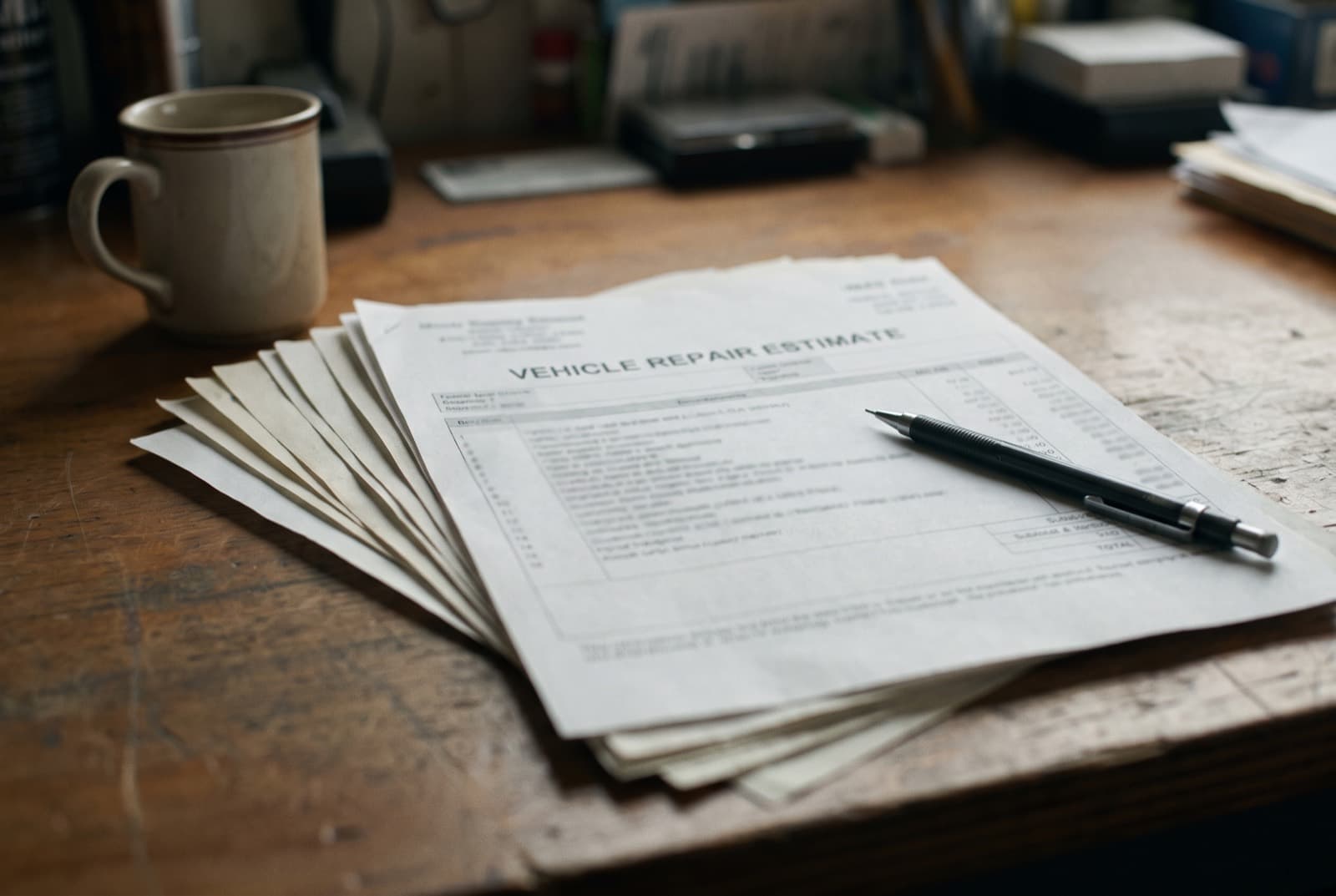
What we actually built
A reader for the insurer’s estimate, and a rule for each thing worth checking. Every rule carries the citation behind it — the procedure page section, the position statement, the inquiry number — so a flag is never our opinion against an adjuster’s. It is a pointer to the document you both already accept.
A rule that has not been measured against real estimates does not ship. Most of the set is switched off for exactly that reason, and will stay off until it clears the bar. We would rather flag ten things you can defend than forty you cannot.
SuppSmith does this
01
Estimate arrives
A PDF of the estimate. CCC ONE today; Mitchell, Audatex and EMS coming.
02
Details come out
Name, address, phone, VIN, plate, claim and policy numbers — removed on receipt.
03
Every line checked
Against the procedure pages, position statements and inquiry records that apply.
You do this
04
Your estimator submits
Accepts what is right, rejects what is not, and sends it through your own system.
Why Tom is building it
[TOM: one line on what you did before this]
[TOM: the specific thing that made you start — a story, not a statistic]
What I keep coming back to is the asymmetry. The insurer’s system wrote the estimate, so the estimate is the starting position by default, and the burden of showing what is missing falls on the shop — the party with the least time and the most to lose by arguing. That is backwards, and it is fixable with software, because the evidence already exists and only needs looking up.
I am not trying to help anyone win an argument they should lose. If a line is genuinely included, the right answer is that it is included, and a tool that says otherwise would cost a shop its credibility the first time an adjuster checked. Being right is the entire product.
[TOM: optional — a direct email or LinkedIn a shop owner can actually reach]
Who we are, on paper
SuppSmith is built by HVN Group Limited, a company registered in Hong Kong. Estimate files are stored in the United States. Customer names, addresses, VINs, plates and claim numbers are removed on receipt, before anything reads the document — including us.
The details are on the security page and in the legal documents, including every vendor that touches an estimate and what each one sees.
See it on your own estimate
Send up to 3 and we will send back the flag report, with the citation behind every line. No card, and no obligation to do anything with it.
Get my audit — free